 Dodgers Digest Los Angeles Dodgers Baseball Blog
Trade deadline day is a high-profile yearly baseball event. Stars are uprooted, futures are sacrificed, none of your favorite reporters sleep. Every fan of a contender hopes for a shiny new superstar to cheer for. This year was a particularly exciting deadline as we saw an uptick in high-profile trades compared to the usual since playoffs expanded. Many contenders got noticeably better, and yet … the best team of them all was mostly absent from the headlines.
The Dodgers made a few moves, adding depth and addressing their most pressing needs. Los Angeles also subtracted three players from their 40-man roster while adding three prospects who, although quality, aren’t close to the majors. Even as they watched their rival Padres target seemingly every player on the market — San Diego made five trades on deadline day — the Dodgers stuck to their guns and balked at sky-high asking prices for stars on the trade block.
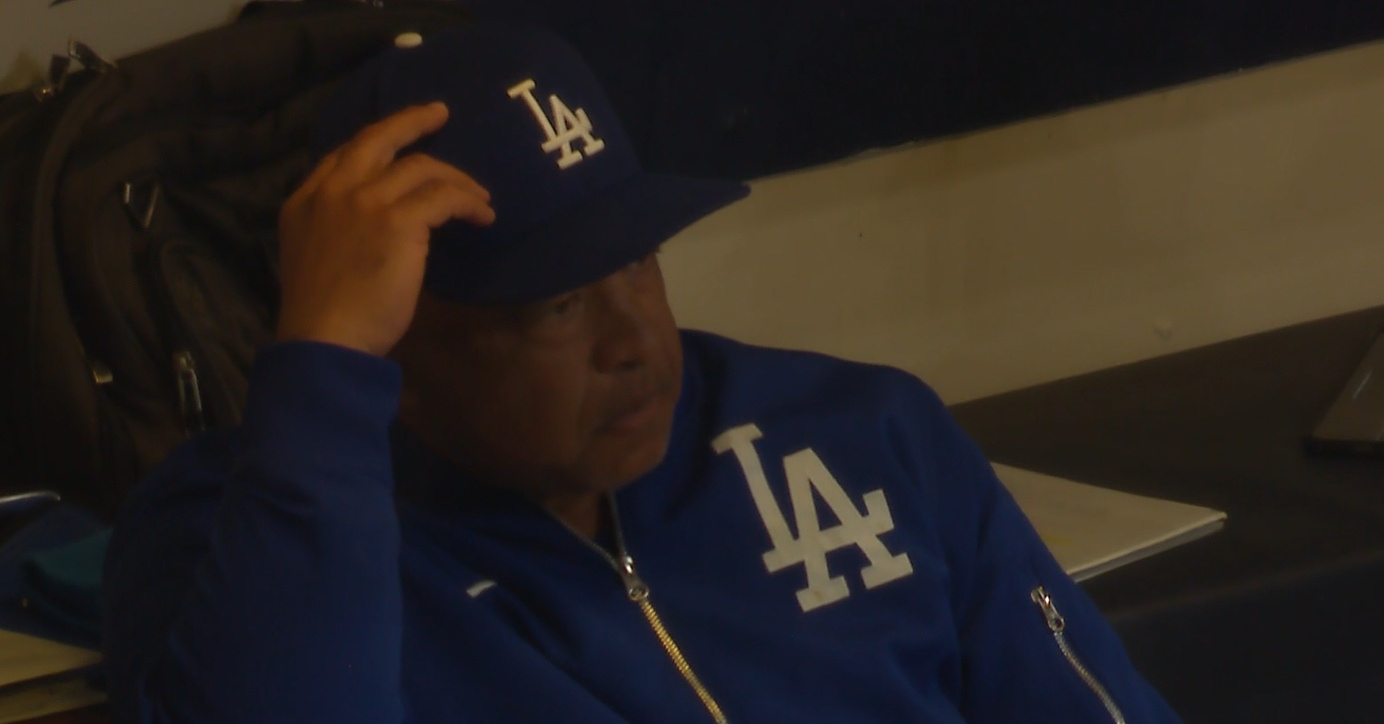
President of Baseball Operations Andrew Friedman and general manager Brandon Gomes‘ approach to the deadline did not fulfill the made-for-TV idea of a successful July 31. As always, the Dodgers were connected to multiple big-name players, some of which ended up traded to rival contenders. But when the clock crawled its way passed the 3 P.M. PST Thursday deadline, they had not made a move that would satisfy the insatiable hunger of a fanbase looking to guarantee a second consecutive World Series title.
——
First, let’s start with what the Dodgers did do. They acquired three 40-man roster players: right-handed relievers Brock Stewart and Paul Gervase and outfielder Alex Call. Stewart debuted as a Dodger nearly a decade ago and has reinvented himself as an impact reliever who is a nightmare for right-handed batters in particular. Gervase is a 6-foot-10 hurler with intriguing stuff and release characteristics but only five big-league appearances. Call is a 30-year-old depth piece who fit the needs of the Dodgers bench.
They also trimmed off some depth, trading struggling veteran starter Dustin May to the Red Sox for outfield prospects James Tibbs and Zach Ehrhard. Long-time Oklahoma City catcher Hunter Feduccia was sent to the Rays in the deal that brought back Gervase as well as left-handed starter prospect Adam Serwinowski and depth catcher Ben Rortvedt. Formerly prized outfielder James Outman was the return to the Twins for Stewart.
Now, for the big story of what they didn’t do. After being connected for weeks to big-name closers Mason Miller, Jhoan Duran and Ryan Helsley, all three were instead dealt to National League rivals of the Dodgers. Many ties were drawn to Guardians All-Star Steven Kwan, as L.A. could have strengthened their outfield with the bat and the leather. Instead, Kwan stayed put in Cleveland. Cardinals utilityman Brendan Donovan also was not moved.
The toughest part for Dodger fans to bear was watching teams like the Padres, Phillies and Mets snatch up many of the could-have-been Dodgers targets while L.A. remained quiet at the top of the market. On the surface, it gave an impression that the Dodgers were not truly going for it; that they were prospect hugging instead doing everything possible to improve the roster; that they were throwing one of 10 precious seasons in the Shohei Ohtani era to the wind.
Here’s the thing: The Padres’ fire-sale of prospects for any-and-all improvements could not be further from the Dodgers’ style, and I think that’s a fact to be thankful for. L.A. still arguably has the best roster in baseball even after the Padres’ improvements, so it’s not like the Dodgers had significant catching up to do. They’ve shown that sustained success is the priority, which is not mutually exclusive to prioritizing every individual year. That goal to stay very good on an essentially permanent basis has brought L.A. two World Championships in the last five seasons.
There have certainly been disappointments along that road. The yearly championship expectation in L.A. is justified and present everywhere inside and outside the organization. Entering the playoffs each year — which is barely acknowledged as a goal to achieve in itself — the Dodgers are among the favorites to win it all. They have played postseason baseball for 12 consecutive seasons, avoiding even a single “rebuild” or “retool” year where they are forced to turn the calendar early.
This is by design. Not just because it’s nice to compete every year, but because it is the winning formula in the unpredictable madness of the sport. We like to think that advancing in baseball’s playoffs is a more controllable destiny than it is.
A 2017 study by Michael J. Lopez, Gregory J. Matthews and Benjamin S. Baumer found that MLB would need to play a best-of-75 series to match the NBA’s best-of-seven “better team advances” rate, which the authors placed at 80%. It has been more than two decades since an MLB team won consecutive titles. The fact is that a big trade deadline acquisition would not have made it any less possible that the Dodgers get bounced from the postseason in another division series upset. It’s the nature of the game.
What does this mean? The best way for the Dodgers to set themselves up to win as many championships as possible is to make sure they have a good chance every year, including this one, and remain patient. Dodger fans have already experienced this loop; the team made the playoffs every season from 2013-19 without a single title to show for it despite multiple standout rosters along the way. Two World Series wins in the last five seasons has been the payoff to all that heartache, and they are still set up to continue rolling the dice with quality odds.
L.A. is not the only team who knows this formula is the way to go. Recently extended Cubs president Jed Hoyer laid out in a post-deadline press conference that Chicago follows a similar process.
“The goal is to be good every year,” Hoyer said. “The goal is to not have massive up-and-down cycles.”
It’s easy for those of us who follow the Dodgers to forget that winning 90+ games every season is not a guarantee. Being in that position requires careful navigation around every roster decision across years, simultaneously prioritizing tomorrow and the more distant future while minimizing the damage to either.
——
That is not to say that the Dodgers never make big or risky moves, or that they never get burned. It means they only pull the trigger when they deem the time and situation right. They’ve done it before, with blockbuster in-season acquisitions through the years such as Yu Darvish (2017), Manny Machado (2018), Trea Turner (2021), Max Scherzer (2021) and Jack Flaherty (2024). My money is on the bet that if there was a controllable star that better fit the Dodgers’ roster-building priorities, they would have been much more aggressive this year. Saving their assets now allows L.A. to make that type of move the next time they see the opportunity, perhaps for a long-term shortstop or similar high-value player.
Friedman and Gomes opted for trades that provided high and projectable organizational value. They plugged holes to round out the roster while adding to their stockpile of prospects that could contribute later on with the Dodgers or on the trade market. A trade deadline like this one, while potentially frustrating in the moment, is what enables the sustained success that makes the Dodgers the powerhouse they’re known to be. They don’t always play it “safe,” but they only take calculated risks that serve the current and/or future of the organization in a way that fits their overarching strategy.
——
The Dodgers will enter the postseason this year with a roster capable, and likely favored, to repeat as World Series champions. Unfortunately, there is no way to guarantee that outcome, nor was there a high-profile trade opportunity that aligned with the Dodgers’ approach this July 31. Instead, they’re banking on the star-studded roster that is already assembled to bring another parade down Vin Scully Ave.
Trust the process.
