 Dodgers Digest Los Angeles Dodgers Baseball Blog
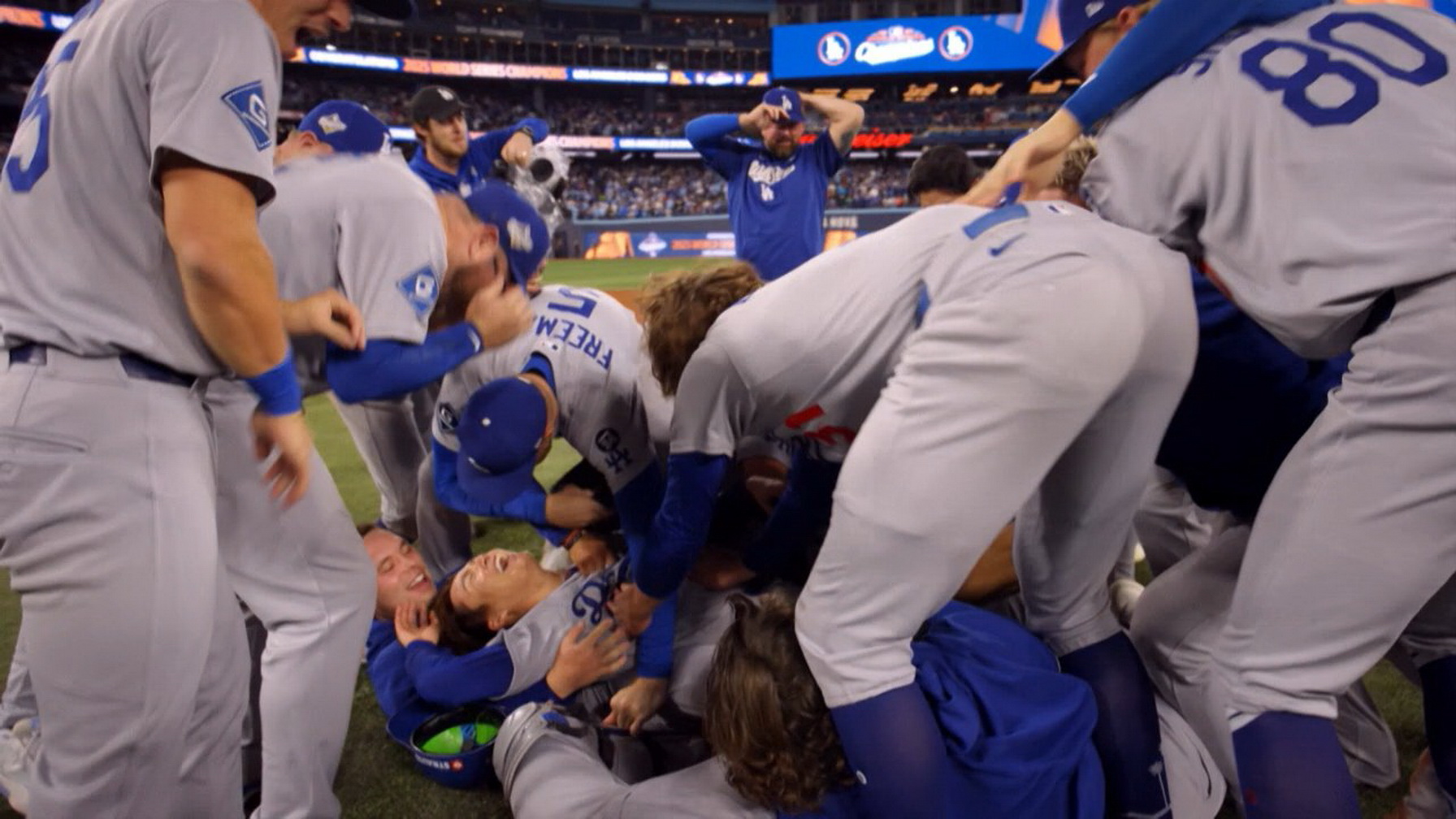
Hello, it’s been a while, so it’s time to catch up on interesting stuff I’ve been reading. A bunch of it is related to the World Series, which I’m sure you won’t mind reliving that much.
======
Defector: David Roth talks about for all the frustration regarding the success of the Dodgers, it’s never quite as simple as having the best team in baseball, and it certainly was never a forgone conclusion that they’d win. And that’s sorta what makes this sport amazing.
But even at their most inexorable, the idea that the Dodgers had somehow permanently or even temporarily solved baseball was never really very convincing. The game doesn’t work like that, and the shape and scale of the postseason makes it even more chaotic. The roundnesses of the bat and ball just don’t fit together cleanly enough to create a sufficiently sheer surface, and haven’t since the sport was dragged out of its feudal era. More than that, the game just has too much wildness in it to be brought to heel. What was objectionable about the Dodgers came down to the fear that enough money and expertise really might solve every unsolvable thing about baseball, or just make it all much less fun. As it turned out, the Dodgers won it all for the second consecutive year. If you watched the World Series, you already know that there was nothing inevitable about it.
He summed things up quite nicely here:
What sets the Dodgers apart isn’t that they are better at all that than other MLB teams, so much as it is that they do more. They are richer, but also they are trying harder—scouting and evaluating more effectively, coaching more comprehensively, being where other clubs aren’t, and then also spending in ways that other teams can’t or just don’t. They are not always right, their prospects and reclamation projects bust just like every other team’s do, but they know enough to have a chance, and are determined enough to try. That these industry-leading practices have resulted in industry-leading big-league teams isn’t surprising, but the way in which those teams have been great reflects both the excellence of the organization and its limitations: They are good enough to make a lot of extra chances and redeem a helpful amount of those, but not nearly good enough to remove the element of chance from the equation altogether. The game cannot really be made easier; the difference is in how many opportunities you can create for yourself, and also in making it harder for the opponent.
Defector: This article by Barry Petchesky is about how Blue Jays fans will never get over the loss, but as a Dodger fan who has been there, I found it weirdly fitting for coming to terms with our past failures as well.
You’re screwed. You will never get over this. You will never fully recover. The sharp pain may age to a dull ache, but it will never go away. You will go hours, then days, then weeks without thinking about how close you came—and then something will remind you, and it will hurt all over again. Who you were last week is not who you will be for the rest of your life. You are ruined; you are a ruined human being. Something that was whole and good in you is irrevocably broken now.
How can you not love baseball?
This is why it’s genuinely insane to me when on social media people talk about how 2017 was so long ago. In sports terms? It’s like yesterday, especially for something nobody’s gonna ever forget. Like I still hold a grudge against Joe Kelly for hitting Hanley Ramirez, and nothing was even close to guaranteed about that team. Shit hurts forever, and that’s what makes sports compelling.
The Verge: A story about how this World Series really uniquely put baseball in the national and international limelight.
MLB has taken the adapt-or-die mindset to heart, taking a sport that feels ancient (complimentary) and tweaking it for a modern audience. Early signs point to MLB’s new strategies paying off. So much of what elevates a pastime into big-C Culture comes from how the public engages with it: the critiques and analysis, the fan edits, the memes, the live reactions, the packed stadiums and watch parties and look-alike contests and parades in cities under attack. We were truly spoiled by this postseason, and I already feel those tinges of nostalgia that will deepen as time passes until I’m the ancient one telling the kids about the 2025 World Series.
An all-timer for sure, and now baseball needs to not ruin that momentum.
——
FanGraphs: Jay Jaffe tried to look at where the Dodgers fit among baseball’s greatest dynasties. They end up way up there … arguably twice within the same window.
While I could have tried to produce some ultimate ranking of expansion-era dynasties by weighing the championships and pennants with the Z-scores, that felt too subjective for this set of objective measures (which nonetheless did involve some subjective choices). I think this ranking illustrates that it’s very tough to maintain regular-season dominance over a stretch that includes multiple championships, and that the Dodgers of recent vintage are at or near the top of the mix thanks to the way they’ve backed their consistency from April through September (give or take a few days on either end) with what they’ve done in October. It’s pretty clear that you can’t win ’em all, but this Dodgers dynasty can stand with the best of the expansion era.
The thing about this Dodgers run is that they simply lacked the World Series trophies for much of it. They built absolute juggernauts but were unable to achieve the ultimate goal. Now that they’ve gone back-to-back, it only makes sense that this run has been validated in its entirety.
Baseball Prospectus: A tribute of sorts to Miguel Rojas by former Marlins employee Bradley Woodrum.
The Miggy I knew—the Miggy who sat on my office couch to talk about analytical tools and brought rookie Isan Diaz to give him a chance to voice an opinion too, the Miggy who mentored young players at the complex on hitting and fielding technique, who led encouraging and career-focused presentations for the minor leaguers, doing his own contemporaneous Spanish translations—clearly cared about the next generation of players.
Worth a read to get a sense as to why he was always going to stick around in some capacity.
The Athletic: Joe Maddon talks about Andrew Friedman and how he makes the marriage between stats and humanity work.
He was always open-minded. He never thought he was always right. He seemed to know that he didn’t know everything, and that’s a really important part of growth.
His approach permeated the culture. I’m not surprised he’s done the same with the Dodgers.
I think early on in the sabermetric revolution, this was basically a missing component. They thought being right (true or not) was enough, while those who were actually intelligent knew that being right meant nothing if you couldn’t get buy-in for implementation with players (and coaches).
——
Baseball Prospectus: The one big move the Dodgers have made so far is the signing of new closer Edwin Diaz, and the consensus seems to be that it makes sense … at least for the Dodgers, particularly because revenue from Shohei Ohtani allows them to take shots they normally wouldn’t.
The Dodgers’ bullpen was lousy in 2025. Díaz is one of the best closers in baseball. Given LA’s willingness to give a contract like this so soon after being burned by Tanner Scott and Kirby Yates, it’s all the more evident that Guggenheim makes so much money from Shohei Ohtani alone that most price tags aren’t real for Andrew Friedman (and they’ve had huge playoff profits the last couple years, too). Could they get burned again, even signing someone with as sterling a reputation as Díaz? Sure! Relievers are weird and we’re only a year removed from a turbulent 2024 for Díaz himself. Unfortunate to lose a couple draft slots and international bonus money, too. But this isn’t a hard move to parse from LA’s end. He’s a lower-variance arm at a high-variance position.
FanGraphs: That said, as with paying most relievers, there’s some concern he could pull a bit of a Tanner Scott.
The yellow flag I’m actually worried about with Díaz is his quality-of-contact numbers. The thing that made him the best reliever in baseball in his prime was not just that he missed more bats than a homesick vampire; Díaz also had terrific quality of contact-suppression numbers. But a 97th-percentile hard-hit rate in 2024 turned into a 57th-percentile hard-hit rate in 2025 — not exactly alarming, given the still-elite whiff rate, but worth monitoring.
That number would’ve dissuaded me from offering Díaz another $100 million contract, but the Dodgers didn’t have to do that. Ben Clemens predicted a three-year, $75 million contract; our median crowdsource estimate was four years and $84 million. To get Díaz for three years and $69 million seems like a tidy piece of business for Los Angeles.
Still, even in terms of paying a closer, it seems like a solid deal.
MLB: Speaking of the Scott comparisons, there’s obviously reason to be more optimistic about Diaz, as he has gotten whiffs at a historic rate for a longer period of time.
Even in terms of pure whiff rate, Díaz is chugging right along. In the pitch-tracking era, which dates back to 2008, Díaz’s 39.8% whiff rate is second among all pitchers with at least 1,000 swings against them, only trailing the 40.6% clip from Devin Williams, who will replace Díaz with the Mets. Last season, Díaz posted a 41.5% whiff rate, comfortably above his career average.
In comparison to Scott, who was an elite bat-misser in his own right before his tough 2025 season, the left-hander “only” owns a career 29.8% strikeout rate and a 34.4% whiff rate. In his platform year in 2024, Scott had a 28.6% strikeout rate and 32.7% whiff rate, well below the marks provided by Díaz this past season.
Furthermore, his two-pitch arsenal is much more balanced.
Díaz and Scott both come at hitters with two-pitch arsenals: a four-seam fastball and a slider. The main difference, though, is Díaz has much better versions of those pitches and less year-to-year variability.
Relievers will be relievers, but the Dodgers had money burning a hole in their pocket and addressed their biggest concern with one of the best in the game.
——
Techer: A feature on Grace Peng and Ryan Casey from the Dodgers analytics department, focusing on their impact on the team and what they do.
He recalls an instance from the 2016 season. Dodgers center fielder Joc Pederson would consistently play shallow on defense in the outfield. “We told him one day, ‘You’ve just got to play way deeper and you’ll catch all these fly balls that are going over your head,’” says Casey, a developer in the team’s baseball systems unit. In the next series versus the Arizona Diamondbacks, the outfielder ended up making numerous catches at the warning track—catches he likely would have never made had he been playing as shallow as before. Pederson seemed surprised. “Oh, you guys are right,” he told them. Casey says it was one of the first times he saw his work impacting in-game results.
Joc mention!
In particular, the positioning cards are thanks to their efforts.
Peng and her analyst teammates have created, for instance, the spray charts that lead to fielding recommendations—where defensive players should stand on the field based on a batter’s historical tendencies. These are perhaps the most obvious daily reminders of the importance of what Peng and her collaborators do. “Everyone has a little card in their hat that tells them where to stand,” she explains. “Anytime a new pitcher comes on and there are defensive shifts happening on the field, it’s cool to see.”
Casey agrees. “The coaching staff loves to use our 42 website to analyze every potential batter-pitcher matchup of the night, to see stats and project where and how to attack every single opponent,” he says. “I know that my tool is contributing to whatever strategy we’re employing that night.”
The Dodgers have been one of the best in baseball at positioning, so they’ve certainly been doing their job well.
======
There’s actually a lot to catch up on, so the next update will come soon (hopefully) and have a lot of the prospect stuff.
