 Dodgers Digest Los Angeles Dodgers Baseball Blog
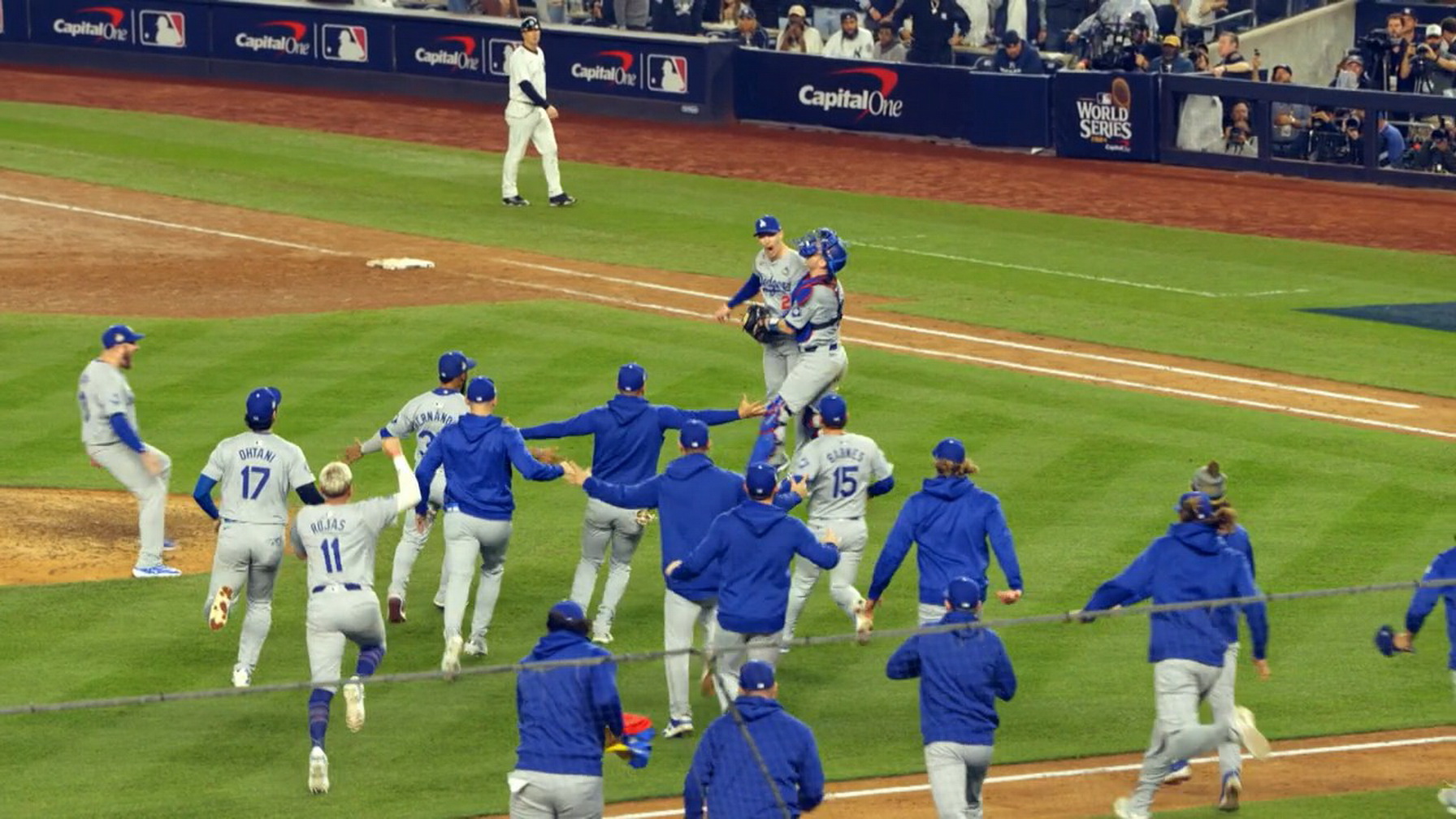
Championship teams don’t just repeat, let alone three-peat. Dynasties aren’t created simply by winning the championship every year, because that’s an unrealistic expectation. Even the best dynasties across all sports suffer setbacks, some of which are minor.
Dynasties echo in the annals of sports history because of consistent winning (not “even-year miracles”) in the face of margins that are razor thin, randomness that is too cruel, attrition covered in pain and loss and being the envy of every other organization.
That’s what the Los Angeles Dodgers are chasing. A three-peat. This has not been done in Major League Baseball since the 1998-2000 New York Yankees. The Dodgers have, off and on, been compared to the New York Yankees in this era, but now they are chasing that true label. In that spirit, we’re going to compare these two teams and see what they have in common and what sets them apart.
——
The Dynasty Yankees And Cores
If the phrase “bought championship” seems nauseating in 2026, back at the turn of the century (somebody get me a cane and some Werther’s originals for that statement), it was much more the narrative even then. Much like the current Dodgers, though, there was a core group of players. They called them the “Core Four.” Derek Jeter, Andy Pettitte, Jorge Posada, and Mariano Rivera were well-known and respected. Half of them are in the Hall of Fame. If you’re wondering who is not, it’s Pettitte and Posada. The steroid era loomed large on his Hall of Fame campaign. For more on whether they belong, ask Jay Jaffe on social media.
The Dodgers, for their part, have gone through a handful of ‘core players’ during this current run. That is mostly because, unlike the ’98-’00 Yankees, this Dodger team has been at the top of the National League West now for 13 years. We have seen the old cores come and go. From Matt Kemp/Andre Ethier to Justin Turner/Chris Taylor/Corey Seager, the Dodgers have shifted into a new core. The one name who tied together that entire run just retired: Clayton Kershaw. We will all see his statue at Dodger Stadium, probably within the next decade. One could argue that Max Muncy and Kiké Hernandez are the only ones left from the older core.
The new core of the Los Angeles Dodgers blends two distinct eras. Freddie Freeman and Mookie Betts are linked due to their timelines, friendships, and batting next to each other in the order. Shohei Ohtani, Yoshinobu Yamamoto, Tyler Glasnow, and Teoscar Hernandez all signed in the same historic offseason. That leaves a few names, one of whom seems always to get lost in the shuffle of less common names and bigger personalities: Will Smith. He burst onto the scene in 2019 and has been the staple catcher ever since. He’s a homegrown superstar who was arguably the other MVP of the World Series, a distant second to Yamamoto.
When baseball fans complain about “homegrown superstars” and a Dodgers roster full of free-agent signings, they cheapen the fact that this core was built in 2013. It grew from players aging out, taking different contracts elsewhere (Seager, Bellinger), and using the success of previous years to make the right signings.
The Pen Is Mightier
The easiest narrative to push forward is that the Yankees + Rivera = pen dominance. Everything about that sentence is accurate. The more subtle part of that, however, is that other relievers in their three-peat struggled mightily. That’s two separate uses of “mighty” in the same paragraph … I should … no, I’m keeping it. Mariano Rivera earns that word. In the ’98-’00 postseasons, that’s three consecutive playoff runs, he pitched 39 innings and gave up ONE unearned run. That is a 0.23 ERA during the playoffs. There are not enough superlatives to describe that dominance. The other names in the Yankee bullpen were not flawless in their World Series runs, however.
The Dodgers, for their part, have had two different bullpen identities so far. In 2024, the bullpen was a mixed bag. Statistically, they were at a 3.53 ERA, one of the better relief corps in MLB. The 29 blown saves, however, were not pretty. Acquiring Michael Kopech was very helpful for the Dodgers down the stretch, and the 24 scoreless innings against the San Diego Padres in the NLDS were, in large part, thanks to the bullpen. The 2024 Dodgers bullpen adapted more than they dominated.
The 2025 Dodgers bullpen … it posted a 4.27 ERA, which was significantly higher than elite bullpen standards, and was clearly a weaknesses on the roster. This was despite the obvious hype surrounding the signings of big names like Kirby Yates and Tanner Scott. The 2025 Dodgers tallied 27 blown saves. Scott himself had 10 blown saves. Yates was ineffective, posting a 5.23 ERA, and was left off the postseason roster. I won’t get into more stats on their playoff performance, but the emergence of Roki Sasaki as a bullpen piece and the heroics of smaller names like Will Klein certainly helped. Obviously, the Dodgers’ starting rotation went nuclear, particularly Blake Snell and the World Series MVP, Yamamoto.
The difference between the Yankees’ dynasty and the Dodgers’ is the shutdown closer. Kenley Jansen‘s prime passed, and he is playing elsewhere (underappreciated for his contributions to the Dodgers, if you ask me), and the 2025 signings for the Dodgers’ bullpen blew up in their faces. This is where Andrew Friedman, instead of recoiling on bullpen signings, went out and signed Edwin Diaz. Whether his signing will work out is left to be seen. These bullpen comparisons are important — but they’re not as important as the playoff X-factor that cannot be denied.
Dynasties Are Identity, Not Names On A Lineup Card
Dynasties aren’t defined by names on a lineup card, though. They’re defined by traits that survive pressure. The late-90s Yankees didn’t just have stars; they had an identity that didn’t crack in October. That’s the part of their legacy the Dodgers aren’t just chasing statistically. They’re chasing it psychologically. Talent-wise? They obviously have the talent to run it back for the third consecutive time.
The late-90s Yankees had something more unique than just talent. They had emotional tranquility. Down by two runs in the seventh? Chill faces. Up five in the ninth? No change in demeanor. There was no panic. They played as if the game’s outcome was never in doubt. That kind of composure doesn’t show up in box scores or statistical analysis. It shows up in October when the margin of error erodes, and everyone starts changing their approach.
Whew, that was as boomer-codeword a paragraph as I have ever written. The thing about cliches, however, is that they do ring true sometimes. How do I know?
The Proof Is In Pudding (Served In The Trophy)
| Dodgers | Blue Jays |
| .203 Batting Average | .269 Batting Average |
| 26 Runs Scored | 34 Runs Scored |
| .658 OPS | .745 OPS |
| 3.95 Team ERA | 3.21 Team ERA |
| 11 Home Runs | 8 Home Runs |
The Dodgers led in exactly one of those main statistical categories. The home runs weren’t random, either. Three of these home runs were either a game-winner (thanks, Freddie), a game-tying (Miguel Rojas), or put the team ahead in extra innings (Smith). Brace yourselves for the big word: these Dodgers were surprisingly clutch with their power. The Dodgers and the dynasty Yankees got big hits when they counted. The Dodgers only scored one more run than the Yankees in the 2024 World Series, which they won 4-1. Clutch hitting and clutch power have been the story of their postseason success.
Almighty Starting Pitching
Starting pitching is the big piece in the playoffs. This is where, so far, the Yankees and Dodgers are most similar. I won’t do every season individually; I’ve tired you out enough, but in 1998, the Yankees’ starting pitching was third in the AL. In 99 and 2000, the season ERA for their starters was decent, middle of the pack. What matters is that the starters showed up in October, where it counted. Just before the 2024 playoffs, the Dodgers’ starting rotation involved Jack Flaherty, Yamamoto, and thoughts & prayers. Some clutch performances from Flaherty (including a stinker or two) and Yamamoto helped anchor their Championship run. Obviously, in 2025, Yama-goato, Snell, and Glasnow carried them. They start 2026 with roughly the same rotation, with a few arms returning from injury. The base is set up. The Death Star? Nearly operational.
Completing The Trilogy
The Yankees’ third championship came from an 87-win team. The Dodgers don’t need a 114-win season. They don’t need statistical superiority across every column. They need insulation from the target on their back. We have seen them nurse their starters throughout the season. The 2025 Dodgers could have easily been a 10-plus+ win team—but they didn’t need to be. As it’s been said by many, decisions are made by those who show up. The Dodgers just need to show up and play Dodger baseball.
The 2024 and 2025 Dodgers have already proven something paramount: they can win without overwhelming. They can win while being out-hit. They can win with bullpen instability (please not again). They can win in chaos. That’s not luck, or at least not entirely. Dodger fans comforted each other for years by citing October Baseball chaos and instability. “Anything can happen in October.” “October variance.” I even saw Dodger fans citing chaos theory (incorrectly, but admirably.) Winning, though, changes narratives. Winning changes the idea of October bad luck into “that’s championship DNA.” The Yankees, for all of the hatred that was cast upon them, found ways to win when they did not simply dominate.
What started in 2013, through Kemp and Ethier, through Seager and Bellinger, through Kershaw’s long arc and into the Ohtani era, doesn’t have to be multiple iterations of cores, a massive competitive window, or even missed opportunities.
It was a dynasty forming in slow motion.
The Yankees of 1998-2000 became Thanos-level inevitable. If the Dodgers win a third, they won’t just three-peat.
They will echo.
