 Dodgers Digest Los Angeles Dodgers Baseball Blog
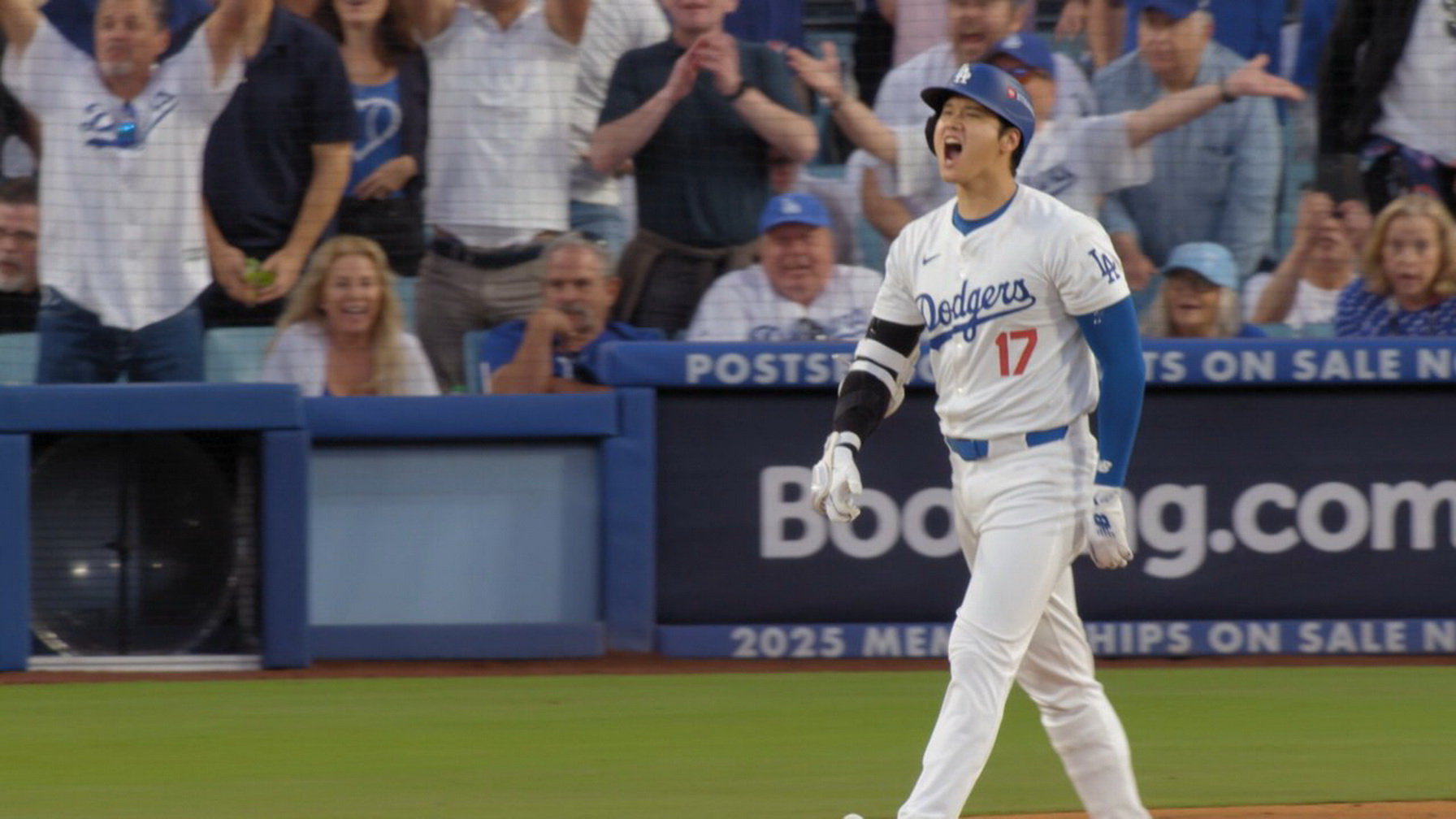
There is almost nothing Shohei Ohtani cannot do on the baseball field. He has proven to be the most unique, most talented and best overall player the game has seen to date. His accolades at the plate are well-known, but his talent on the mound is still a bit unrealized, thanks in part to injuries.
Ohtani has won three consecutive MVPs, including becoming the first designated hitter-only to ever win it (2024). He won in 2023, but that came with 132 innings on the mound — which was cut short due to an elbow injury that would cost him 22 months as a pitcher. He won last year while getting back to pitching (47 innings).
With some expecting big things from him on the mound in 2026, it’ll be interesting to monitor his offensive numbers while Ohtani is trying to be the best pitcher he can be.
We’ve already seen a bit of an outlier. In 2024, Ohtani stole 59 bases en route to the sport’s first-ever 50/50 season. Before then, Ohtani’s career-best in steals was 26. He stole 20 bases last season. Even Ohtani could not maintain a 50-plus stolen base pace while incorporating pitching back into his regimen. Because, let’s be honest, his 10-year, $700 million wasn’t because of his stolen base ability.
But what about his hitting?
Ohtani has missed significant time in his MLB career due to injury. He has, essentially, undergone two Tommy John procedures that cost him all of 2019 and 2024 on the bump. He missed all but 1 2/3 innings in 2020, which is not accounted for in the stats below because he recorded literally five outs in the COVID-shortened 2020 season.
There’s always been questions about how a full-bore pursuit of both might hamper his production, and Dodger fans were wondering that as recently as late last year. So a comparison of his numbers while not pitching due to injury, but still able to hit, versus his numbers while actively pitching (and prepping between starts and everything else that comes with pitching at the professional level, let alone MLB) is what we’re looking at here.
——
Here are his statistics by season when he hasn’t had a pitching obligation due to injury. In other words, he was able to focus solely on hitting and not pitching.
| Year | BA | OBP | SLG | ISO | wOBA | BB% | K% | wRC+ |
| 2018 | .264 | .343 | .544 | .280 | .374 | 9.2 | 31.2 | 139 |
| 2019 | .286 | .343 | .505 | .219 | .352 | 12.6 | 28.6 | 120 |
| 2020 | .190 | .291 | .366 | .176 | .290 | 7.8 | 25.9 | 90 |
| 2024 | .310 | .390 | .646 | .336 | .431 | 11.1 | 22.2 | 180 |
| 2025 | .297 | .393 | .642 | .344 | .425 | 13.5 | 24.2 | 177 |
The middle three seasons above are all full-season statistics from Ohtani. In 2018, he missed three months on the hill from June 6 through Sept. 2 and didn’t make his pitching debut for the Dodgers in 2025 until June 17, meaning his offensive numbers are through June 16.
Aside from a anomalous 2020 season, his offensive production has been in-line with his career numbers. He has become a better hitter over the years, but his 2018-19 levels of production are All-Star-caliber. He just took his hitting to another level after recovering from his Tommy John procedure in 2019 and getting through the 2020 campaign.
Conversely, here are his statistics while actively pitching at the MLB level.
| Year | BA | OBP | SLG | ISO | wOBA | BB% | K% | wRC+ |
| 2018* | .289 | .372 | .535 | .246 | .385 | 11.6 | 25.6 | 146 |
| 2018# | .310 | .371 | .632 | .322 | .418 | 9.3 | 25.8 | 169 |
| 2021 | .257 | .372 | .592 | .335 | .393 | 15.0 | 29.6 | 150 |
| 2022 | .273 | .356 | .519 | .246 | .370 | 10.8 | 24.2 | 142 |
| 2023 | .304 | .412 | .654 | .350 | .433 | 15.2 | 23.9 | 180 |
| 2025^ | .268 | .391 | .605 | .337 | .412 | 16.2 | 26.9 | 168 |
Key: *= Through June 5; #= After Sept. 1; ^= After June 15
It’s hard to do a true 1:1 comparison because 2018-2020 Ohtani is a vastly different hitter than than 2021-present Ohtani, which is why we’re focusing on rate stats. But he has fared better as a hitter when pitching rather than when he wasn’t, which is honestly surprising. And if you want to limit it to the last 2-3 years, the numbers are pretty close. He has the same wRC+ in 2024 (when he didn’t pitch) as he did in 2023 (when he did pitch). His offensive numbers while not pitching and pitching are similar, too. He got fewer hits once he took the ball in ’25, but he also saw his walk rate increase while his wRC+ decreased by just 9 points.
——
With talk in Dodger camp about Ohtani being a Cy Young contender, his pitching resume is not as impressive as his hitting resume. That’s not terribly surprising, even if a lot of pundits thought Ohtani would fare better as a pitcher than a hitter at the MLB level. Pitchers break, and such.
His best and only Cy Young award finish is fourth, which came in 2022. He had a 2.33 ERA, 2.40 FIP and an elite 26.5 K-BB%. He logged 166 innings that season and finished behind Justin Verlander (unanimous winner), Dylan Cease and Alek Manoah. While Cy Young voting has undergone a bit of a transformation in recent years — more focus on rate stats rather than counting stats and having 200 innings pitched — Ohtani is going to need to have a 2022-level pitching campaign if he is to dethrone Paul Skenes and all the other great pitchers in the National League — including his teammate and 2025 World Series MVP Yoshinobu Yamamoto.
In his 47 regular-season innings last year, Ohtani logged a 2.87 ERA, 1.90 FIP and a still-elite 27.1 K-BB%. He threw another 20 1/3 innings in the postseason. He got hit around a bit in the World Series (7.56 ERA, 5.18 FIP), but that was also in jut 8 1/3 innings, which included starting on three days’ rest in Game 7 — just the second time in his career he had pitched on three days’ rest and both were the only times in his career he has made a start on fewer than five days of rest. And the instance in 2023 came after he started in Boston on April 17 and threw only two innings due to a long rain delay. He came back on April 21 and threw seven innings against the Royals.
——
Alden Gonzalez at ESPN wrote a story just yesterday about Ohtani’s pitching and how those in the org are expecting big things from him on the mound in 2026.
“‘He seems like he’s on a mission, pitching-wise,’ Dodgers president of baseball operations Andrew Friedman said. ‘Whenever we’ve seen him on a mission, good things happen.’
Friedman witnessed it in 2024, the first season of Ohtani’s 10-year, $700 million contract with the Dodgers. A second repair of his ulnar collateral ligament had taken pitching off the table, and so Ohtani set out to become a more aggressive baserunner. He more than doubled his previous career high in stolen bases, chartered the 50/50 club and became the first designated hitter to win an MVP. Friedman is now among the many who believe Ohtani will dedicate a similar focus to pitching. What it produces can only be left to the imagination.
“‘There’s no ceiling with him,’ Dodgers catcher Will Smith said. ‘He can go out there and win a Cy Young this year. I have no doubt about that.'”
It would be unrealistic to expect Ohtani to continue to hit at the all-world level he has the last three seasons while also pitching well enough to be the best pitcher in the NL, if not all of baseball. But if anyone can do it, it’s him, and over the course of his career he hasn’t seen a fall-off in the box.
The fact that we’re even having this level of discussion about a singular player in this sport in 2026 is insane. No one else in the modern game has even attempted what Ohtani is doing, let alone actually doing it. And Ohtani is doing this against competition that don’t have a part-time jobs in the offseason selling appliances at Sears; all shade to Babe Ruth. He’s doing this in a world that is the most technologically advanced it has ever been (and is every passing day).
Ohtani truly is a unicorn, and we should just sit back and take in the marvel that he is.
