 Dodgers Digest Los Angeles Dodgers Baseball Blog
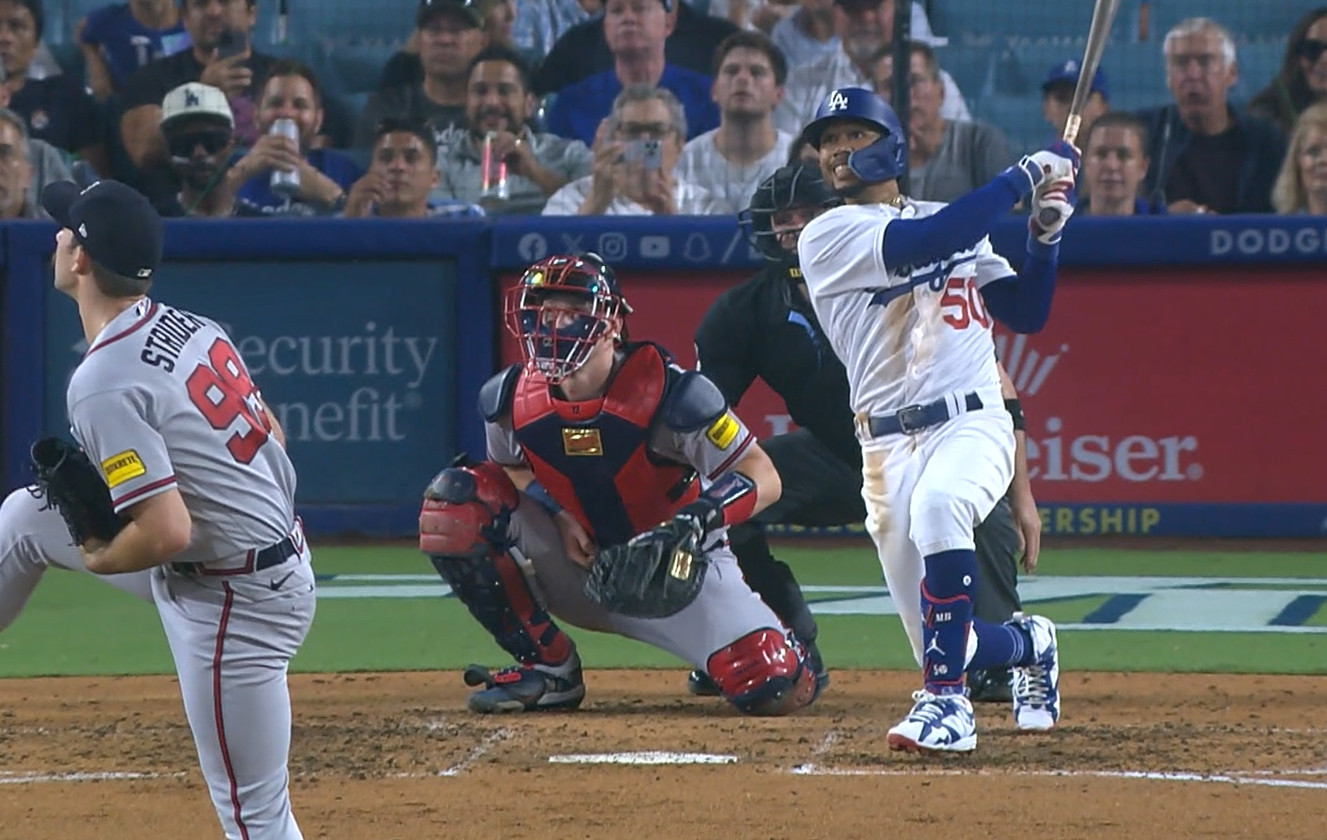
The Dodgers return to action tomorrow, as they begin their quest for a threepeat in the NLDS after a much-needed first round bye. They earned their bye by winning 100 games and finishing with the second-best record in baseball, three games back of the top-seeded Brewers in the NL. They had to hold off the Braves, who won the NL East and took down their division rival Phillies to earn their NLDS date with the Dodgers. The Dodgers and Braves feel like one of those classic NL rivalries, but the teams haven’t met in October since the 2021 NLCS, when the Braves blocked the Dodgers from back-to-back championships en route to winning their most recent title. Atlanta had home field advantage in that series and won in six, but haven’t gotten out of the NLDS since then.
Atlanta did beat up on the Dodgers a bit this season, winning five of six games and outscoring them 26-15. The Dodgers took the first meeting in LA on May 8, but dropped the next two with 7-2 losses in both games and then getting swept in Atlanta in August. Each of those games in August was a one-run game, with the first two losses coming after Tanner Scott came into a tie game and gave up a run both times.
——
Dodgers Rotation
This should be the Dodgers’ biggest advantage against basically any other team in the playoffs. The Dodger rotation finished with the second-best team ERA in baseball (3.43, only higher than the Yankees’ 3.30) despite only getting 13 starts from Tyler Glasnow and nine from Blake Snell, who are both currently as healthy as they’ve been all season. They had the fourth-best strikeout rate in baseball among starters (25.3 percent) and the third-best walk rate (6.9 percent). As for this series specifically, the rotation isn’t set yet but we do know that Tarik Skubal is starting Game 1.
The Dodgers will start Tarik Skubal in Game 1 of the NLDS, multiple sources with knowledge of the situation told @TheAthletic.
— Fabian Ardaya (@FabianArdaya) October 2, 2026
The big deadline acquisition will get the ball to start the Dodgers' run at a threepeat: https://t.co/koxlWdqCmO
Fabian reported that Skubal will make his Dodger postseason debut tomorrow.
While they haven’t announced the rest of their rotation yet, there’s reports that Yoshinobu Yamamoto threw a sim game on Wednesday. That theoretically lines him up for Game 3 on Tuesday in Atlanta, likely leaving either Snell or Glasnow as the Game 2 option. Either way, the Dodger rotation is in good shape considering they haven’t played a game since Sunday. The matchups could be dictated by Atlanta’s struggles against left-handed pitching (more on that in the Atlanta lineup section).
In a weird way, the plan might make the most sense.
——
Dodger Bullpen
The Dodger bullpen was pretty solid for most of the season, finishing in the top-10 in ERA (3.74), FIP (3.67) and posting the second-best strikeout rate in baseball (26.2 percent). They were led by Scott, who bounced back from a really rough 2024 with a 2.69 ERA and 82 strikeouts in 63 2/3 innings. He moved back into the closer role after Edwin Diaz‘s injury and eventual demotion and set a career-high with 25 saves. The rest of the bullpen has a lot of moving pieces, but Alex Vesia, Evan Phillips and Kris Bubic figure to be locks. Vesia was mostly excellent this season but had some major issues with walks, posting the seventh-worst walk rate among qualified relievers (13.5 percent). Phillips looked mostly great after returning from Tommy John and Bubic only pitched in five games after returning from a shoulder injury, allowing four hits in 4 2/3 scoreless and walkless innings. Roki Sasaki also figures to play a big part in relief after making 23 solid starts this season. Sasaki suffered a blister late in the season and returned in a relief role in late-September. He threw three innings in three relief appearances and allowed two hits total, striking out six without issuing a walk or allowing a run. Roki was a huge bullpen piece last October, white-knuckling his way to a 0.84 ERA in 10 2/3 innings over nine outings despite striking out only six and walking five.
Scott, Vesia, Bubic and Sasaki figure to be the certain locks, and there’s some questions about the rest of the bullpen. Jack Dreyer was up-and-down this season and struggled a bit with the longball, but could be a third lefty option. Edgardo Henriquez was arguably the best Dodger reliever this season, but hit the IL in mid-September with back discomfort and hasn’t pitched since September 13. He’s expected to be on the roster, but it’ll be interesting to see how he comes back not having pitched in a real game in a few weeks. Diaz had a mostly awful season, but looked excellent down the stretch and could have played his way onto the roster. Chad wrote about Diaz’s progress on Wednesday. Brock Stewart was getting some usage in leverage and could be in, and Justin Wrobleski could be a long relief option out of the pen.
——
Dodger Lineup
This is, surprisingly, where things could be dicy for the Dodgers. If they’re playing close to their potential, they should be able to outhit and outslug anyone. That happened for a decent chunk of the season and the Dodgers did finish with overall excellent offensive numbers. They had the second-best team OPS (.762) and had the fourth best team strikeout rate (20.4 percent) and third-best team walk rate (10.1 percent), which all amounted to the fourth-most runs scored in baseball (801). All of these numbers seem insane compared to how things have felt for the last few months. They’ve also hit velocity surprisingly well.
The Dodgers hit well against velocity during the regular season. They tied the Baltimore Orioles for the top xwOBA (.337) against pitches thrown 95 mph or harder. The two best hitters in the postseason field this season against velocity (95 mph or harder, minimum 1,000 total pitches faced) are Will Smith (.461 xwOBA) and Muncy (.450), while Betts is 11th (.380)
After struggling through a good part of the second half, the Dodger offense got going a bit in September, as Chad detailed recently. They were middle-of-the-pack offensively in the second half through August (22nd in runs scored with 164, 16th in OPS at .709) but found it in September with the fourth-most runs scored (131) and the second-best OPS (.792).
The Dodgers had three players finish with an OPS above .800 after having four last season, but didn’t have a single player over a .900 OPS after having two last season. Ohtani led the Dodgers with an .889 OPS, but struggled hard down the stretch amid knee and bicep issues. In 29 games between August 8 and the end of the season, Ohtani posted a .666 OPS and struck out 42 times in 131 plate appearances. They IL’d him in September and brought him back for the final week of the season, where he went 5-for-21 with a double, a walk and eight strikeouts in five games. It feels insane to call the best player on earth the x-factor of a playoff series, but the Dodgers need Ohtani to be Ohtani to get their offense going.
Outside of Ohtani, the Dodgers are relying on a couple other bats that are coming off injuries. Will Smith nearly missed three months with a neck injury (which I must say again, they initially called a day-to-day thing and didn’t IL him for like four days) and came back strong in September. Smith posted a .290/.400/.548 triple slash in 21 games in September and walked as many times as he struck out (11). He hit four homers in September after only hitting six in 52 games before the injury. Andy Pages took a fastball off the hand on August 21 and missed a month with a broken hand. He came back for the final week of the season and looked excellent, going six-for-18 with four walks and three extra-base hits in the final six games of the season.
Freddie Freeman and Mookie Betts were going in opposite directions towards the end of the season. Freeman put together a typically solid season with a .792 OPS, but was borderline unplayable in September. He went 14-for-76 with six walks in September and only had one extra-base hit in September, striking out 23 times in 20 games. He had an .839 OPS on August 31, so he managed to lose nearly 50 points in 20 games. On the other hand, Mookie had a .701 OPS on August 31 before going off in September and raising that to .780. He went 30-for-89 and posted a 1.112 OPS in September, with seven homers and 16 walks to only 11 strikeouts.
The other x-factor could and should be Josue De Paula. JDP had a very exciting debut, going 10-for-31 with 11 walks and only five strikeouts in 11 games and half of his hits went for extra bases. He was sent down when Ohtani returned from the IL in a very unpopular move, but the timing of that allows him to be eligible to be rostered for the NLDS. Dalton Rushing could take his spot as the no-defense lefty bat off the bench, but he only got three ABs down the stretch after coming back from elbow issues.
——
Braves Rotation
Atlanta’s rotation is not in the best state headed into the NLDS. Their starters had a 3.76 ERA this season, which was the sixth best in baseball. They were led by Chris Sale, who figures to be in the Cy Young race again after posting a 2.16 ERA in 162 2/3 innings. Sale also turned in his best start of the season against the Dodgers in August, with a complete game shutout and a season-high 11 strikeouts and no walks. Outside of Sale their rotation was still quite good, with Martin Perez posting a 3.04 ERA in 30 games (26 starts) and old friend Grant Holmes posting a 3.44 in 31 games (29 starts). They also traded for Tyler Mahle at the deadline and he dominated down the stretch, posting a 1.99 ERA in nine starts for Atlanta.
In a perfect world, those four would be the rotation for the NLDS against the Dodgers. However, Perez was placed on the IL late in the season and isn’t eligible to return until Game 3 of the NLDS, so manager Walt Weiss already said he’d be out for this series. The Phillies took Atlanta to Game 3 on Thursday and both Holmes and Sale pitched in that game. Ray Kerr opened the game for Atlanta and got through 3 1/3 before giving way to Holmes who took down two innings on 28 pitches. Despite having a 6-2 lead in the eighth, they chose to pitch Sale on short rest (he started Game 1 as well) to close out the game, getting four outs in 21 pitches. Mahle started in Game 2 and threw seven very strong innings, but would be on short rest for either start this weekend.
Outside of those four, the options are a bit bare. Bryce Elder is also out for this series after having minor knee surgery in September and could be back in the NLCS, Reynaldo Lopez was on the IL and likely isn’t an option. Rookie J.R. Richie could be an option, but posted a 4.91 ERA/5.56 FIP in 17 appearances (11 starts) this season.
——
Braves Bullpen
Atlanta surprisingly had one of the best bullpens in baseball this season. They posted a 3.44 bullpen ERA (fourth-best in baseball, only behind Milwaukee in the NL) and their 8.6 percent walk rate was also the fourth-best in baseball. Closer Raisel Iglesias made his first career All-Star game, posting a 2.55 ERA in 60 innings with 34 saves. 21-year-old Didier Fuentes had a stellar rookie season with a 2.45 ERA in 73 1/3 innings over 58 games and a 30.5 percent strikeout rate and only a 7.2 percent walk rate. Fuentes pitched in all three games against the Phillies and allowed a run on three hits in three innings, including the game-losing homer to Alec Bohm in the 10th inning of Game 2. Atlanta’s big free agent signing was Robert Suarez, and he was dominant before getting injured in June. Suarez had a 0.56 ERA in 32 innings over 31 relief appearances through June 19, allowing two runs in that time. He had a forearm strain and came back for two appearances in September and he allowed a run in both of those games, doubling his run total for the season. He made the Wild Card roster and pitched in Game 3, giving up an inherited run after relieving Holmes.
Atlanta also has some strong lefty arms, led by a pair of Dylans. Dylan Lee led Atlanta with 71 appearances and posted a 3.09 ERA in 67 innings. Lee was a bit better against righties this season, allowing a .541 OPS against righties and a .604 OPS against lefties despite all three homers he gave up this season coming off righties. Dylan Dodd posted a 2.54 ERA in 49 2/3 innings and was also better against righties than lefties. Righties OPS’d .564 off Dodd and lefties OPS’d .623 off him. Atlanta also had lefties Kerr and Brent Suter on the Wild Card roster, and both of them posted sub-2.00 ERA’s in their limited time with Atlanta this season. Kerr posted a 1.47 in 18 1/3 innings and Suter posted a 1.67 in 27 2/3 innings after being acquired from the Angels at the deadline.
It’s actually a surprise that they’ve had issues against left-handed hitters, perhaps opening a window for JDP to make an impact.
——
Braves Lineup
Atlanta’s offense was actually pretty mediocre for most of the season. They finished with a wRC+ of 97 (20th in baseball) and a .718 team OPS, good for 16th in baseball. They put the ball in play, with the 10th-best team strikeout rate (21.6 percent) and the third-lowest walk rate (7.7 percent). They have the second-highest chase rate in baseball (33.6 percent, only behind the Rockies) but have the fourth-best contact rate on pitches out of the zone (62.3 percent).
The lineup was anchored by most of the usual suspects. Matt Olson led the team with an .823 OPS and Michael Harris II (.812) and Drake Baldwin (.817) also finished above .800. Ronald Acuña Jr. just missed with a .796 OPS and dealt with a couple minor injuries this season, playing in only 107 games. Ozzie Albies was an All-Star and had a .758 OPS in the first half, but had a .575 second-half OPS and a .451 OPS in September to finish with a .685. The big offensive issue was Austin Riley, who continued his downswing with the worst season of his career. Riley was one of the most feared third base bats for a few season, posting a .878 OPS and winning two Silver Slugger awards over three seasons from 2021-2023. His OPS has been in a freefall since then and fell to a career-low .654, his first season under .700.
Relevantly for the Game 1 starter decision and likely Game 2 starter decision as well is the Braves struggling against lefties this year.
Three games won’t erase the season-long struggles, but Albies and Riley put up big numbers in the Wild Card round. Riley went 2-for-9 with three walks and no strikeouts in the three games against the Phillies and hit the game-winning three run bomb off Jhoan Duran in the eighth inning of Game 1. Albies went 3-for-9 with three walks and a strikeout and hit a two-run homer in Game 3 off Zack Wheeler to give Atlanta a 5-0 lead in the fourth.
Atlanta has some experience outside of the big names. Mauricio Dubon and Ha-Seong Kim each got starts at short in the Wild Card round and Dominic Smith, Mike Yastrzemski and Rowdy Tellez were all on the Wild Card roster. Smith got a start at DH and pinch hit in the other two games, Yastrzemski started a game in left and a game at DH and Tellez didn’t appear in the series.
——
We’ve all historically been terrified when the Dodgers have a first-round bye, but it couldn’t have come at better time this season. The Dodgers should be set up nicely for this series while Atlanta’s pitching plans are all out of whack. Both teams are led by superstars and have a number of lesser-known players that could very well carry their teams into the NLCS. There shouldn’t be a single team in baseball that can keep up with the Dodgers if they play close to their potential, but Atlanta is definitely a team that could give the Dodgers loads of issues if they’re playing to their capabilities.
——
NLDS Schedule
Game 1: Braves @ Dodgers Saturday October 3, 1:00 PM PT (Fox)
Game 2: Braves @ Dodgers Sunday October 4, 5:00 PM PT (FS1)
Game 3: Dodgers @ Braves Tuesday October 6, 3:00 PM PT (FS1)
Game 4: Dodgers @ Braves Wednesday October 7, 3:00 PM PT (FS1)*
Game 5: Braves @ Dodgers Friday October 9, 5:00 PM PT (Fox)*
*if necessary
